|
|
|
Scale models are manufactured in one of three ways:
- DIE-CAST - preferred process offering a well detailed model at
the lowest unit cost, which is achieved by means of high volume production runs
- BRASS - best method for small quantity runs of highly detailed models
- WHITE METAL OR RESIN HAND-BUILTS - best suited for limited quantity
runs that can be produced at a lower cost than by using the brass process
|
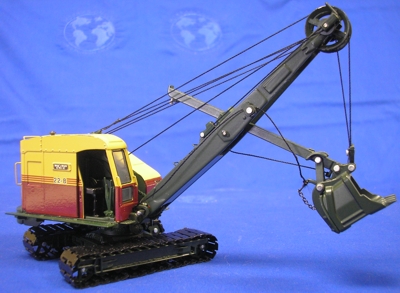
DIE-CAST models allow high detail while offering the best durability
at a lowest cost per unit. However, a larger initial investment is required
for tooling and the minimum production run is generally 2,500 pieces. Our
Bucyrus-Erie 22-B shovel is a fine example of a die-cast model in 1:50 scale. It features metal tracks, operating drums and
winches, individual track movement,
a working dipper and opening doors and panels. These and other features can
be included on a die-cast model.
Quantity produced: 2,500
Click here for more information on diecast
models. |
 |
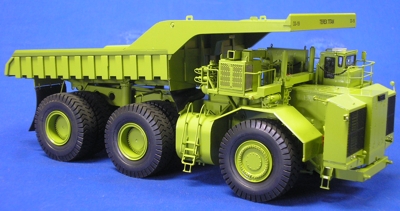 |
BRASS models permit the addition of highly detailed features but
they come at a premium as increased design costs must be spread over a smaller model
run. The brass, 1:87 scale Terex Titan pictured here exhibits
functionality along with accurate, realistic detail. In comparison to the shovel above,
this model incorporates finer, hand-crafted railings, piping and detail parts whereas
larger castings are required on the die-cast model due to the metal used for durability.
Quantity produced: 300
Click here
for more information on brass models. |
WHITE METAL or RESIN HAND-BUILTS are also ideal for short production
runs and while the overall investment is lower, the resulting cost per model is
higher. Most white metal and resin runs average
between 50 and 100 pieces.
Even though these models can be more fragile than die-cast pieces, they still retain
all the detail as shown in this example of a Marathon LeTourneau L1200 wheel loader.
Quantity produced: 100
Click here for more information on white metal/resin models. |
 |
|